The Relationship
A history worth building on
When you're the world's largest online video platform, developing new products is inherently a messy, wicked problem. Over several years, Curiosity Atlas worked alongside YouTube's internal innovation team and product-specific groups alike, on research sprints, journey mapping, concept prototyping, roadmap planning, and more. That range, and the trust we built, eventually brought us to something bigger: scaling a new way of thinking and problem solving.
That became Visioning Bootcamp.
The Challenge
Too popular to scale
The Visioning team, YouTube's internal innovation service, ran a proven but heavy model: a 3-4 month engagement with two embedded designers, built to help teams find and define new product opportunities. It worked well enough to become its own kind of problem. Demand for it outpaced what a small internal team could sustainably deliver.
Curiosity Atlas came in as a recurring thought partner and force multiplier, translating Visioning's own approach into something lighter and scalable enough to reach more teams without diluting what made it work in the first place.
That meant reckoning with three things at once:
Too popular to scale as-is.
Needed to narrow its focus.
Needed to scale its impact, not just its output.
The Approach
Six mindsets. Six phases.
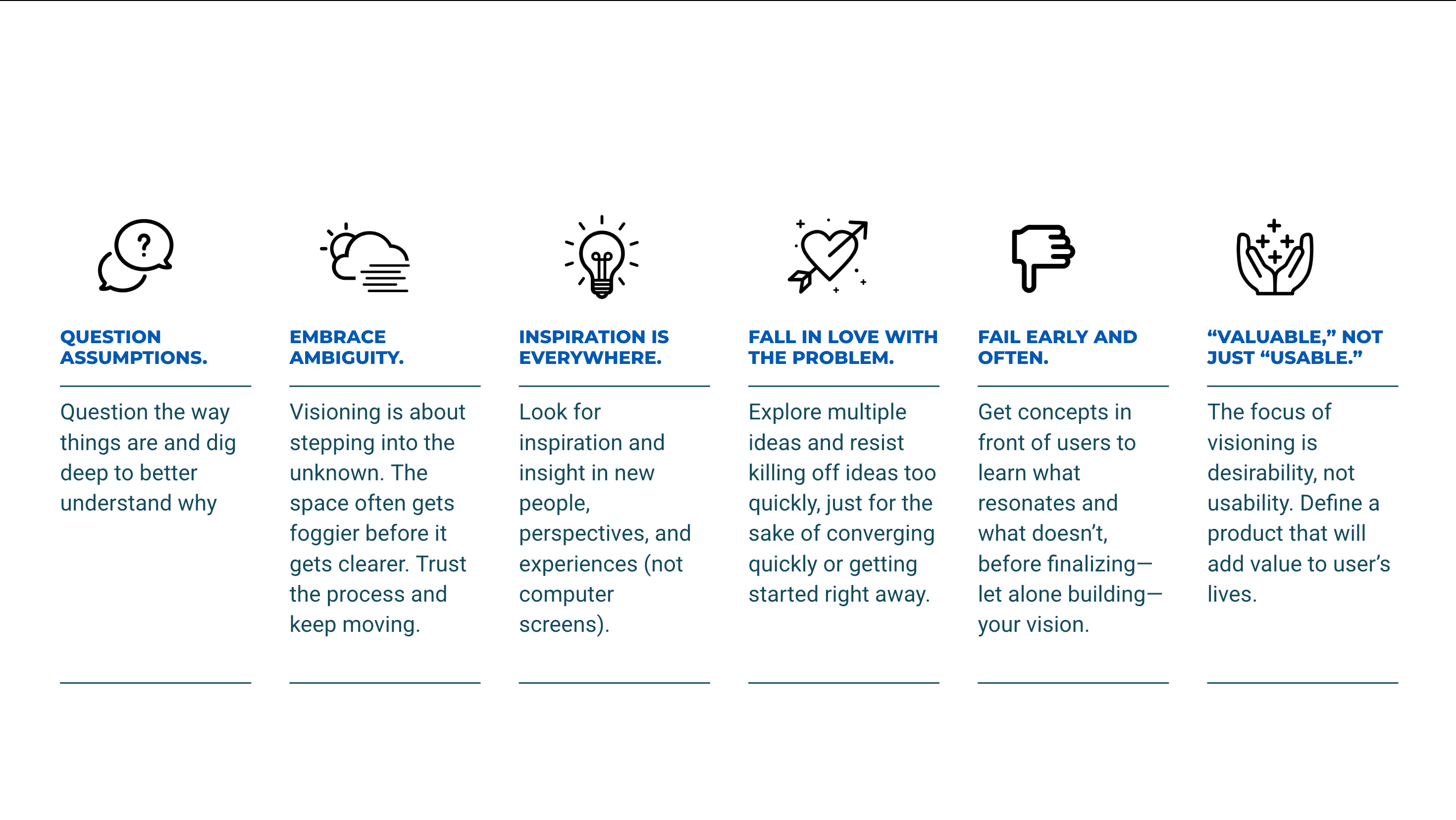
Working alongside the Visioning team over the years, we got to see the core of their approach evolve. Every engagement was rooted in six mindsets that played out over six phases: Activate the team, Immerse in the problem, Frame the opportunity, Explore the possibilities, Define the vision, Inspire action. Our lighter touch approach needed to share the same foundation.
We went back through past engagements, interviewing designers and project managers, and mapped the emotional arc of the process. A key insight: designers trust the process. It's part of the job. We know the most ambiguous moments can lead to great impact. Bootcamp's audience wasn't designers, they were teams working mostly on their own. We needed a lightweight version that didn't compromise the integrity of Visioning or the confidence of our client teams.
The Format
Eight weeks, built for impact
Bootcamp's first iteration ran 8 weeks, with particular attention paid to exactly when in-person time, the workshops, would matter most: too many and teams lose momentum to their day jobs, too few and the energy that makes Visioning work never builds. Three workshops landed at the moments that counted most: kickoff, synthesis, and the pitch.
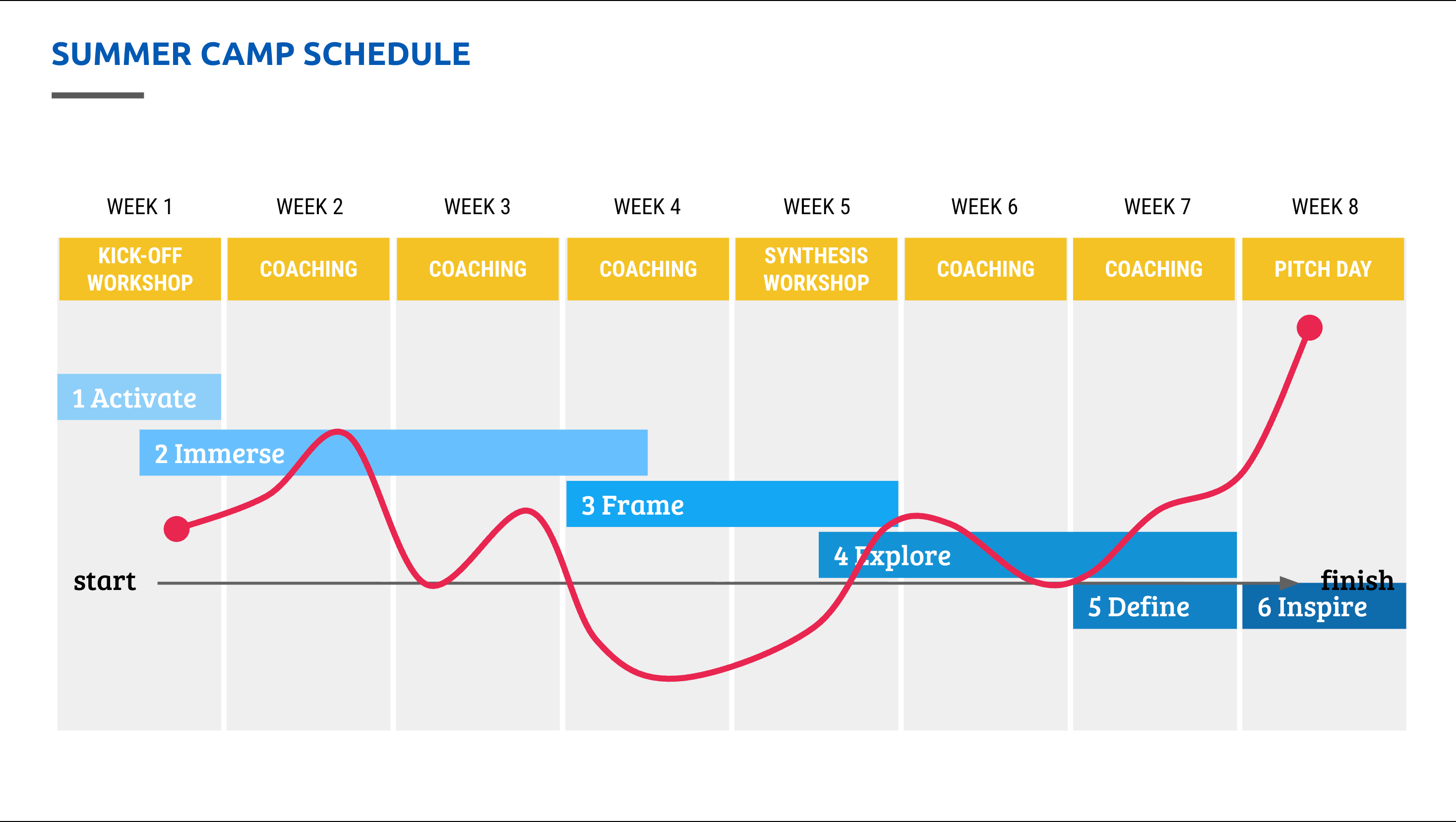
Between them, teams worked self-guided but not alone: weekly coaching, a shared "clubhouse" space, and a running newsletter kept momentum between sessions. Eight weeks in, teams pitched their new concepts directly to company execs, feeding into decisions on which product bets to pursue in the next budget year.
The Outcome
Impact, and what we'd change
On the product. A viewer-first, outside perspective on the product area, plus real visioning expertise through coaching.
On people. New methods learned, other disciplines engaged in research, participants pushed outside their usual roles.
On culture. Teams disrupting their own thinking, seeing the bigger picture, collaborating across product lines.
Lessons learned:
Self-guided, team-based work is genuinely hard. Coordinating the team and carving out time within the day job took real effort.
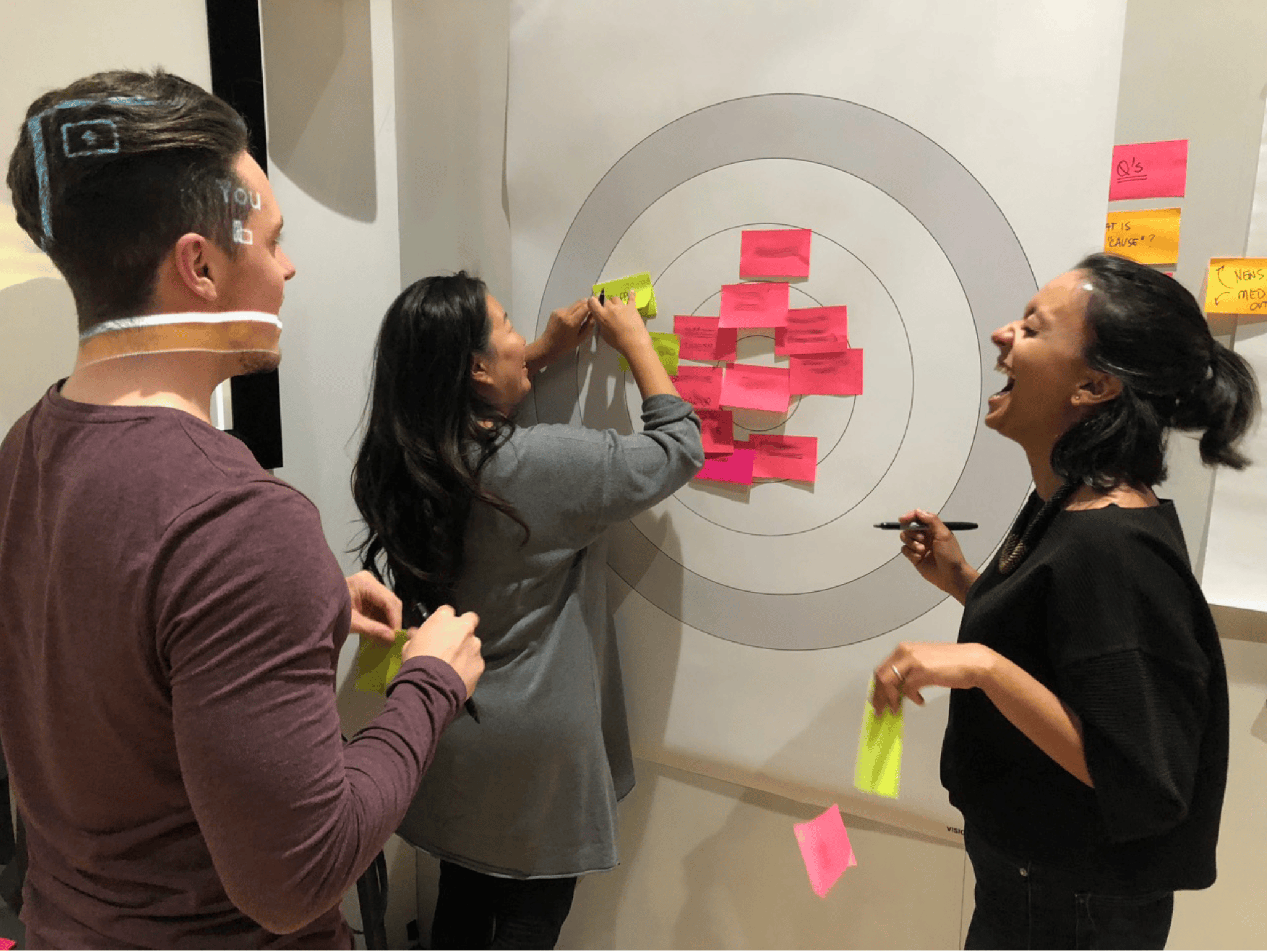
Workshops carried the process. Facilitated time together is where real progress happened.
Coaching needed two distinct modes. Process coaching and Visioning methods in the first half, content coaching and synthesis in the second.
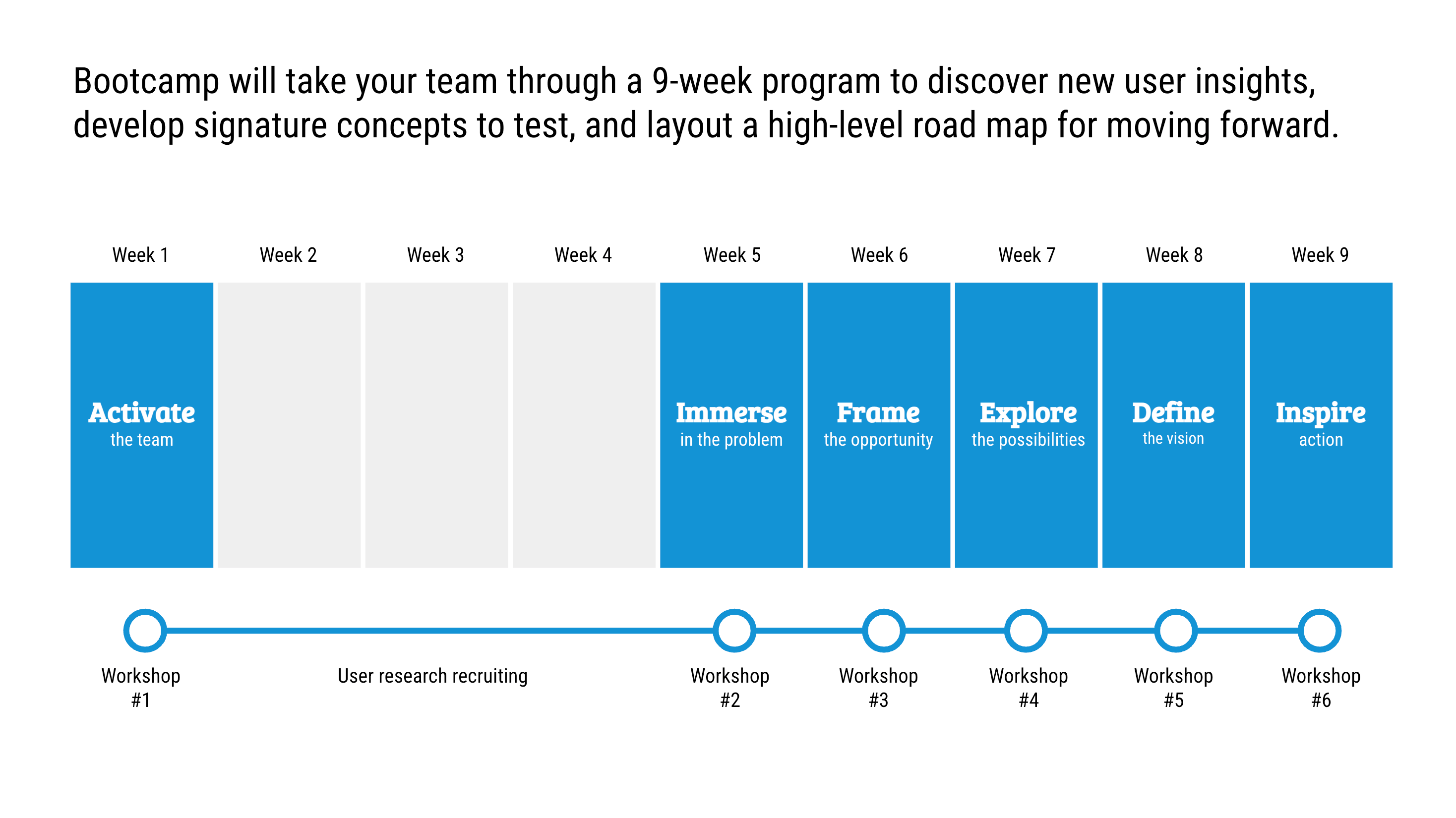
After running it, we learned enough to revise it. The second iteration moved to 9 weeks, added a dedicated research and recruiting buffer before the real work began, and shifted from three big workshops to six smaller, more frequent ones, one per phase.
Closing
How it ended
Then COVID happened. Curiosity Atlas eventually dissolved. Gretchen went on to join YouTube's team directly, taking the thinking in-house instead of bringing it in from outside.
Nobody does amazing work alone.
This project was made all the better with:
Curiosity Atlas